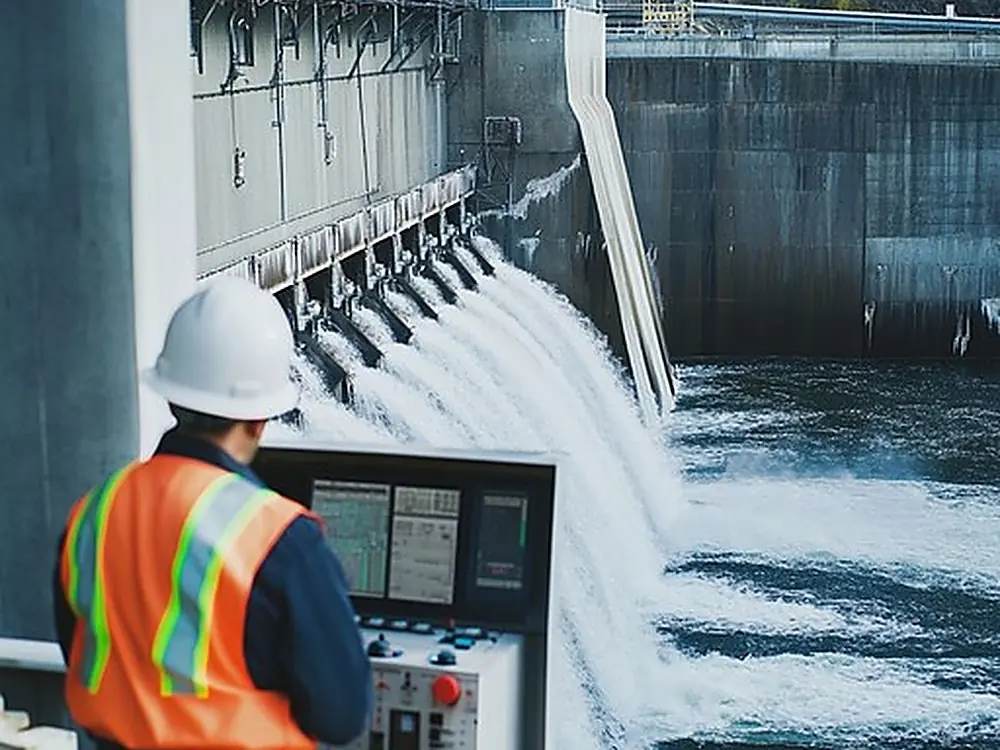
01 · Energy & Utilities
Generation and asset operations
Dispatch and maintenance models trained on telemetry nobody independently validated.
- Sensor lineage
- EU AI Act high-risk
- Outage forecasting

Every AI strategy rests on a data foundation. Most organisations build the AI first and discover the foundation was never verified. This is why decisions fail, AI stalls, and regulators find what you couldn't.
And the cost of getting it wrong lands on risk, compliance and the bottom line — quietly, quarter after quarter, before anyone realises the foundation was never verified.
Stalled programmes, regulatory exposure and wasted spend — accumulating silently until something breaks in public.
Investment sits idle when pilots cannot be trusted into production.
Decisions you cannot explain or trace become compliance exposure.
Models built on flawed inputs underperform — or fail in production.
Overlapping feeds and unused licences quietly inflate every budget.
Strategic calls made on numbers no one independently checked.
Country teams tidy the numbers before they reach the centre. The board sees what they are allowed to see.
Defensibility is not a philosophy. It is a set of checkable facts about your data, your vendors, your models and your reporting chain — each of them verifiable, none of them self-assessed.
These twelve are not a framework we invented. They are the twelve questions that actually get asked when something goes wrong: by a regulator, by an auditor, by an acquirer's diligence team, or by a board member who has stopped believing the dashboard. Each one is answerable with evidence or it is not.
They are also the twelve dimensions the diagnostic scores — so the assessment and this page describe the same thing, in the same order.

What you depend on but do not control — and who carries the risk when it changes.
Whether it is complete and current — and whether you would know if it stopped being.
Every number, through every transformation, back to a source you can name.
A named owner who can resolve an incident, not a RACI slide that says one exists.
Evidence generated by running, or assembled by hand under deadline.
Training sets, evaluation sets and live inputs, verified before they shape an output.
What every pound on data, licences and compute is doing — and what is dormant.
How much capacity goes to manual validation that should be automated.
Whether decision-makers act on the number, or quietly re-check it first.
What people say when their manager is not collecting the answer.
Whether an AI result holds the second time, and whether you could explain any difference.
Whether pilots reach production, and whether data readiness is what stops them.
The most common misconception in enterprise AI is that buying from a large vendor transfers the risk. It does not.
Under the EU AI Act the obligation to evidence data governance sits with you. Your vendor's conformity assessment discharges their duty, not yours. DORA requires a register of critical providers with tested exit paths; NIS2 names supply-chain security directly.
Third-party data frequently prohibits model training, derived-data reuse or redistribution. Exchange and market-data audits routinely produce fee claims backdated years.
A model updates, a schema shifts, a sub-processor is swapped — and outputs move underneath decisions you have already taken. Nobody is monitoring the vendor's side of the boundary.

The person who ran the procurement has sunk cost and a reputation attached to the decision. Internal audit reports to the executive who signed the contract. We sell no software, no systems and no implementation — which makes us the only party in the room with no reason to protect the relationship.
“If your business model depends on the relationship surviving the answer, the answer was never independent.”
No audit practice. No software to license. No transformation agenda. No vendor alliance. One interest: an independent answer you can put in front of a board.
What changes by sector is the evidence a regulator asks for — not whether you need it.
Dispatch and maintenance models trained on telemetry nobody independently validated.

Load and balancing models where an error is measured in supply, not accuracy points.

Predictive maintenance models still trusted long after their sensors drifted.

Charging, telematics and pricing built on streams nobody has reconciled end to end.
The same lineage, control-testing and reporting-reconciliation work applies in each — under a different regulator. The method does not change by sector. The evidence pack does.
A short set of questions about how your data is sourced, governed and reported. You get a gap analysis on screen — which areas are solid, which are exposed, and what it typically takes to close each one. It is an educational tool first: most people learn something about their own estate before they ever speak to us.
Four tiers, from a low-commitment assessment that needs no system access through to a standing assurance relationship. The diagnostic tells you which modules apply to your gaps, and we send the shortlist with indicative price ranges to your inbox.
Three ways in, then one logical path. You only move to the next stage when the previous one has earned it — each stage is scoped, priced and useful on its own.
A 30-minute conversation about where your AI and data exposure sits today. No preparation, no system access.
30 minutes · no costA short structured questionnaire that returns a gap analysis across lineage, quality, controls, model inputs and reporting.
5–10 minutes · freeWhere you sit against your sector and against what your regulator is already asking others to evidence.
Sector comparisonWe turn the diagnostic and benchmark findings into one shared leadership view: where the ambition is, where the exposure is, and which of the two is currently louder. Output is an agreed shortlist of what is worth assuring.
We define exactly what will be verified, against which standards, with what evidence, over what period, and what it costs. Nothing open-ended, nothing discovered halfway through.
The work itself — lineage tracing, control testing, model-input verification and the remediation that follows — delivered alongside your teams rather than around them.
The evidence pack: what was tested, what holds, what does not, and what remains open — written so a director can defend it in front of a board, an auditor or a regulator without translation.
Models drift, vendors change, schemas move. Controls stay tested and lineage stays verified between cycles, and each cycle re-runs the benchmark — so the path loops rather than ends.
Discretionary or L&D budget. No procurement, no system access.
We return a scoped quote within 24–48 hours.
We scope, then issue an SOW + MSA. Procurement and security review expected.
Request a scope, then an annual contract on net terms.
Take the diagnostic. We'll email your shortlist with indicative price ranges — no catalogue to wade through.

A 30-minute board-level briefing on where your defensible layer is missing — and the fastest, lowest-friction way to begin.